Focus area alignment

Regional Impact: Rotterdam


Duration of support

4+ years


Theory of change

By developing realistic training models and education for pediatric surgeons, complex operations can be better prepared and performed, leading to better and safer care for newborns with lung abnormalities.

By keeping donor hearts warm and beating outside the body and biologically strengthening them with ex situ cardiac perfusion, more donor hearts become suitable for transplantation and the survival and recovery of children with severe heart failure is improved.

🔗 vriendensophia.nl

Erasmus MC Sophia Children's Hospital

jaarlijks ontvangen tientallen pasgeborenen direct betere zorg

Life-saving training for pediatric surgeons

Realistic training lungs for rare and complex pediatric surgeries.

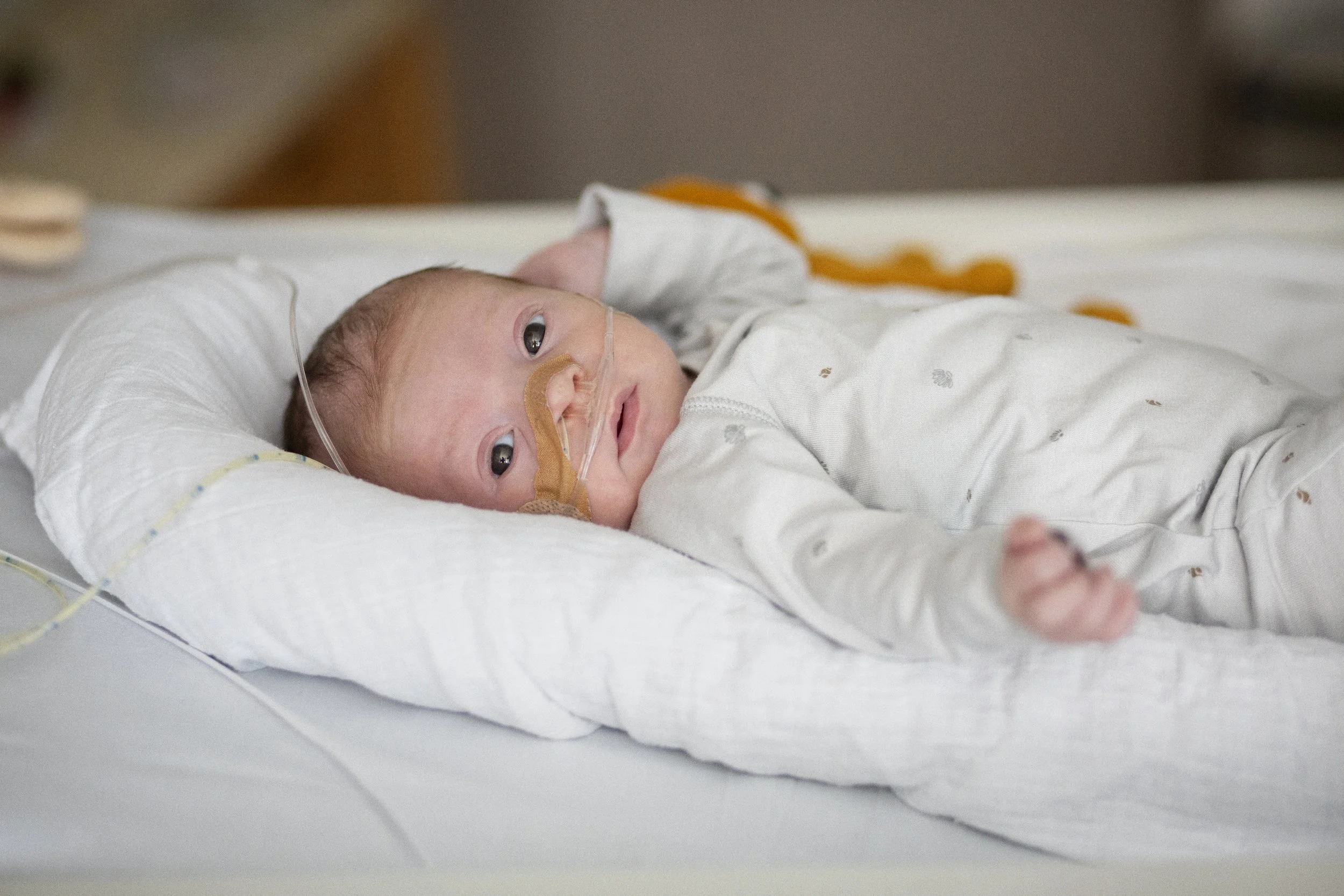
Newborn babies have fragile, tiny, and complex lungs. A congenital lung defect can therefore have serious consequences. Surgery is rare and technically extremely challenging. At Erasmus MC Sophia Children's Hospital, they do everything they can to achieve their goal: always providing the best possible care to our youngest patients. They achieve this not only with advanced technology but also by continuously improving the knowledge and skills of the surgeons who perform these life-saving procedures.

With this project, Sophia is developing realistic, reusable training lungs that mimic real anatomy as accurately as possible. This allows (pediatric) surgeons to safely practice before operations. They are also creating a simplified model for parents, so they better understand what happens during the operation. This helps them approach their child's treatment with greater confidence.

Unique breakthrough in pediatric heart transplantation and heart repair thanks to new technology

A world of opportunities for more life.

For children with end-stage heart failure or severe congenital heart defects, a heart transplant can be life-saving. The major problem is that donor hearts are extremely limited and must be transplanted within six hours. With ex situ cardiac perfusion, the donor heart is kept warm, beating, and well-perfused outside the body. This allows the heart to be preserved longer, biologically strengthened, protected from damage, and prepared for rejection. This increases the number of available donor hearts, improves recovery after transplantation, and ultimately increases the survival rate of children worldwide.